
From being exorbitantly priced to facing stiff competition, Harley was always going to find it tough to crack a market like India, says Dhruv Munjal.

Second body blow after diesel ban on engines of 2,000 cc and above in NCR.

Leading automakers Maruti Suzuki India, Hyundai Motor, Kia Motors and Tata Motors reported sales growth in the domestic market in November, aided by robust offtakes amid the festival season. While Maruti Suzuki India reported marginal growth, Hyundai logged in its highest ever monthly sales in November. Others like Honda Cars India, Toyota Kirloskar Motor, Mahindra & Mahindra and MG Motor India also reported sales growth in November as compared with the same month last year.

A good agricultural harvest and a timely arrival of monsoon, besides a slew of government schemes, have also come as a bounty.

The development comes after a recent notification from the Union home ministry, which has permitted companies to resume manufacturing operations and reopening of shops in red, green and orange zones with certain riders.

Top gainers include Yes Bank, HUL, Vedanta, NTPC, Bharti Airtel, Adani Ports, PowerGrid and Tata Motors, rising up to 5 per cent.

The year gone by witnessed some amazing new and updated products launched in the 150cc premium commuter segment. Let's check them out.

The Argentinian becomes the first brand ambassador of the company in its 70-year history.

The indices closed with losses for the week, with the Sensex declining 476.14 points, and the broader NSE Nifty falling 155.45 points during the period.

During April, Maruti Suzuki India's domestic car sales were up 2.72 per cent at 86,481 units, as against 84,188 units in the same month last year.
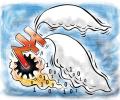
Though startups find 17 mentions in the Budget speech of the finance minister, and have been promised tax exemptions, the reality is that only 2 per cent of the 4,648 applications received from startups for income tax exemption had been approved as of February 2019, according to an answer to a Parliament question. As India's startup space bubbles with activity - new, young players are tapping into opportunities opening up - there are local anti-portfolio stories circulating about investors missing opportunities in 'unicorns', or companies that have reached valuation of $ 1 billion, says Vandana Gombar.

Large manufacturers are investing in small companies to get a peek into their R&D. Alnoor Peermohamed and Anita Babu report.
Among the stocks that have seen the largest cut by MFs, the DVR shares (shares with differential voting rights) of Tata Motors have seen a cut of 243 basis points (bps) in MFs' stake.

The $306-million investment in Ola Electric Mobility by SoftBank Corp, Arun Sarin Family, Ratan Tata and Matrix has been the biggest funding in this space in value terms this year.

Strong gains in metal, energy, auto and power shares lifted the key indices to new highs.

The BSE Sensex jumped 70.42 points to end at 34,503.49, while the broader NSE Nifty finished at 10,651.20, up 19 points.
The restraint on part of investors was chiefly because of RBI's minutes of its December policy meeting, which showed that some members were concerned about rising oil prices, its inflationary impact and possibility of fiscal slippage.

ICICI Bank was the top gainer in the Sensex pack, surging 4.64 per cent, followed by Axis Bank at 3.86 per cent and SBI 2.53 per cent.
The 50-issue NSE Nifty in range-bound movements settled higher by 59.15 points, or 0.58 per cent, at 10,252.10.

The Nifty finished the day at 10,265.65, a hefty gain of 98.95 points, or 0.97 per cent, after shuttling between 10,270.85 and 10,195.25.

Vehicle sales across categories registered a decline of 8.62 per cent to 20,86,358 units from 22,83,262 units in May 2018.

Honda has grown from 15% in FY12 to 27% now; Yamaha has doubled share to 5% in five years.

Auto sector cheers RBI rate cut as 'festival gift'
These sectors are seeing a marked slowdown, as consumers are postponing purchase decisions amid uncertainty and severe cash crunch, report Ram Prasad Sahu, Sheetal Agarwal & Ujjval Jauhari from Mumbai.
The benchmark Sensex gained 4,642.84 points, or 16.%, while the broader NSE Nifty surged 1,572.85 points, or 18.20% during this period.

Five companies get more volumes from scooters than motorcycles.

What stocks will gain from a normal monsoon?

Ather Energy would set up 30 charging points across Bengaluru by the end of May and the number would go up to 60 by the end of the year.

The entire series consists of the shorter format of cricket, which draws more audiences.

The analysis covers BSE 200 Index's 171 companies for which data on the compensation to the boards of directors for FY14 and FY13 are available.
Ajit Mishra, vice president, Research, Religare Broking, answers queries on how to invest in stocks.
In 2008, the 13 companies on the list accounted for 34 per cent of the overall m-cap.
Most listed corporate entities in the country are in a fix. With the sudden declaration in late March of a nationwide lockdown to tackle the Covid-19 pandemic, the final calculations of their financial results for the year 2019-20 (FY20) are hanging in limbo. Till April 19, only 41 of the 3,947 companies listed on the BSE have managed to finalise the dates for the declaration of their yearly financial results.

The list of companies skipping dividends in FY19 includes some of the country's largest firms and industry leaders such Tata Motors, Avenue Supermart, Future Retail and Vodafone Idea, among others.

The Sensex closed the day at 28,141, up 486 points, while Nifty50 settled at 8,716, up 155 points.

Money managers have turned cautious about the technology space.

Take out Maruti Suzuki and Honda, and the auto sector's prospects suddenly don't look all that rosy.

India Inc on Saturday cheered the road map for lowering corporate taxation.

This is its biggest single session fall since August 24, 2015, when it had lost 1,624.51 points.

India's cash-rich promoters are not the same as the wealthiest. For example, Mukesh Ambani is the richest Indian based on his stake in Reliance Industries, followed by Premji, the Adani family of the Adani group, and Radhakishan Damani of Avenue Supermarts.
